

Exploring How a Non-Sales Book Strengthens Modern Gap Selling Thinking
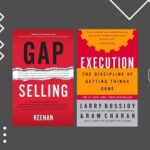
Continuing the Gap Selling Journey- My Favorite Non-Sales Book explores how ideas outside traditional sales literature can significantly elevate how sellers think, communicate, and diagnose buyer problems. This perspective shifts attention away from product-heavy conversations and toward human behavior, decision-making patterns, and the psychology of change. Many sales professionals underestimate how much non-sales content can refine their ability to uncover meaningful buyer gaps. The Gap Selling methodology thrives on clarity around current state, future state, and the cost of inaction, and those concepts become sharper when influenced by broader disciplines. A non-sales book often provides unfiltered insights into how people actually think, rather than how sellers assume they think. This creates a more grounded and realistic approach to discovery conversations. The result is a more intentional and thoughtful seller who prioritizes understanding over pitching.
The Unexpected Role of a Non-Sales Book in Gap Selling Development
Non-sales books often play a surprisingly powerful role in shaping how sellers interpret buyer behavior and organizational challenges. Instead of focusing on closing techniques, they highlight how humans evaluate risk, interpret problems, and resist change. Continuing the Gap Selling Journey- My Favorite Non-Sales Book emphasizes that better selling often begins with better understanding of people rather than better understanding of products. Gap Selling depends heavily on identifying the space between current reality and desired outcomes, and non-sales literature expands awareness of how that gap is perceived internally by buyers. It also helps sellers slow down their thinking, allowing them to notice details they would normally overlook. This creates a deeper sense of curiosity during conversations. It also encourages sellers to stop assuming and start exploring more deliberately.
A few key influences from non-sales thinking include:
-
Understanding how emotions influence decision-making in business contexts
-
Recognizing how habits shape organizational resistance to change
-
Learning how cognitive bias affects perceived urgency
-
Observing how people justify inefficiencies over time
-
Developing patience in uncovering real vs. assumed problems
-
Strengthening observation skills during buyer interactions
These insights allow sellers to operate with more precision when identifying gaps.
Reframing Sales Thinking Through Broader Knowledge Sources
Continuing the Gap Selling Journey- My Favorite Non-Sales Book encourages a major shift in how sales professionals think about their role in conversations. Instead of acting as solution providers from the beginning, they become structured problem explorers. This reframing is essential for Gap Selling because it removes pressure from early-stage conversations and replaces it with clarity-building dialogue. Sellers begin to see that most buyers are not fully aware of the depth of their own problems. This awareness changes how questions are structured and how conversations unfold. It also reduces the tendency to rush toward presenting solutions.
Non-sales literature reinforces the importance of narrative and context in shaping decision-making. People rarely make decisions based on isolated facts; instead, they build internal stories about their situation. Sellers who understand this become more effective at uncovering how buyers interpret their own challenges. This approach also improves the ability to connect emotional and operational elements of a deal. The shift is subtle but powerful, as it moves sales conversations from transactional to investigative. It also creates space for buyers to articulate problems they have not fully expressed before.
Aligning Non-Sales Insights With Gap Selling Principles
Continuing the Gap Selling Journey- My Favorite Non-Sales Book aligns naturally with the core principles of Gap Selling because both emphasize clarity over persuasion. The Gap Selling framework relies on understanding the current state in detail before discussing potential outcomes. Non-sales insights help deepen that understanding by revealing how people experience inefficiencies in real life. Sellers who adopt this mindset begin to ask better questions and listen more carefully to responses. They also become more comfortable with silence during conversations, allowing buyers to think more deeply.
This alignment can be broken down into core focus areas:
-
Clarifying the buyer’s actual working environment instead of assumptions
-
Identifying emotional and operational consequences of current challenges
-
Understanding how different stakeholders experience the same problem differently
-
Mapping how the future state is defined internally by the buyer
-
Recognizing where perception gaps exist within the organization
-
Strengthening the accuracy of problem identification
Each of these areas strengthens the Gap Selling approach by grounding it in real human behavior rather than surface-level assumptions.
Behavioral Shifts That Strengthen Gap Selling Execution
One of the most powerful outcomes of engaging with Continuing the Gap Selling Journey- My Favorite Non-Sales Book is the behavioral transformation it encourages in sellers. These shifts are not about tactics but about mindset and presence during conversations. Sellers begin to reduce their dependence on structured scripts and instead focus on natural dialogue. They also become more observant of tone, hesitation, and word choice from buyers. This awareness leads to stronger discovery conversations and more accurate problem identification.
Behavioral shifts often include:
-
Listening more than speaking during discovery calls
-
Allowing buyers to fully express problems without interruption
-
Avoiding premature solution framing
-
Asking fewer but deeper questions
-
Paying attention to emotional undertones in responses
-
Remaining neutral when hearing pain points
-
Resisting the urge to immediately solve problems
These behaviors build trust and allow buyers to open up more honestly about their challenges. Over time, this leads to stronger pipeline quality and more predictable outcomes.
Cognitive Frameworks That Strengthen Buyer Understanding
Continuing the Gap Selling Journey- My Favorite Non-Sales Book also introduces cognitive frameworks that help sellers interpret buyer behavior more effectively. These frameworks are not about selling techniques but about understanding how humans process decisions under uncertainty. Buyers rarely act purely logically, even in business environments. Instead, they rely on mental shortcuts, emotional filters, and past experiences. Recognizing this helps sellers avoid misinterpreting silence or hesitation as disinterest.
Understanding these cognitive patterns allows sellers to identify hidden barriers in deals. It also helps them better anticipate objections before they are spoken. Sellers become more effective at guiding conversations without forcing outcomes. This creates a more natural and collaborative discovery process. It also improves the accuracy of opportunity qualification.
Expanding Discovery Conversations Beyond Surface-Level Pain
Continuing the Gap Selling Journey- My Favorite Non-Sales Book emphasizes the importance of moving beyond surface-level pain during discovery conversations. Many sales interactions stop at symptoms rather than exploring root causes. This limits the seller’s ability to fully understand the size and urgency of the gap. Strong Gap Selling execution requires digging deeper into operational, emotional, and strategic layers of a problem. Each layer reveals new information that strengthens the overall understanding of the buyer’s situation.
To expand discovery depth, sellers often focus on:
-
Identifying inefficiencies hidden within daily workflows
-
Understanding the impact of problems on multiple teams
-
Exploring how issues have evolved over time
-
Clarifying what has already been attempted to solve the problem
-
Measuring the cost of delays or workarounds
-
Connecting individual frustration to organizational impact
-
Revealing unspoken expectations from leadership
This level of depth transforms discovery conversations into meaningful diagnostic sessions rather than surface-level exchanges.
Strengthening Questioning Skills Through Broader Thinking
Questioning is at the core of Gap Selling, and Continuing the Gap Selling Journey- My Favorite Non-Sales Book reinforces how important it is to develop structured curiosity. Effective questions are not designed to lead buyers but to uncover reality. Sellers who improve their questioning skills often see immediate improvements in deal quality. This is because better questions lead to better clarity, which leads to better qualification. The goal is not to ask more questions but to ask more meaningful ones.
Strong questioning approaches include exploring situation context, impact depth, and root causes. Each layer builds on the previous one, gradually revealing the full scope of the problem. Sellers also learn to avoid assumptions and instead let buyers define their own experience. This creates a more authentic understanding of the gap. Over time, questioning becomes less about technique and more about mindset.
Emotional Intelligence as a Core Sales Advantage
Continuing the Gap Selling Journey- My Favorite Non-Sales Book highlights emotional intelligence as a critical factor in effective selling. Understanding emotions in a business conversation is not about manipulation but about awareness. Buyers often express frustration, urgency, or hesitation in subtle ways. Sellers who recognize these signals can adapt their approach accordingly. This leads to more relevant and empathetic conversations.
Emotional intelligence also helps sellers manage their own reactions during complex deals. It prevents overreacting to objections or premature disqualification of opportunities. It also allows for more balanced conversations when multiple stakeholders are involved. By staying emotionally neutral, sellers can better interpret the true state of the opportunity. This creates stronger alignment between buyer needs and seller responses.
Practical Application in Daily Sales Work
Continuing the Gap Selling Journey- My Favorite Non-Sales Book is not just theoretical; it directly influences daily sales execution. Sellers who apply these insights begin to notice improvements in how they run discovery calls and manage pipelines. They become more intentional about documenting buyer pain and mapping gaps accurately. This leads to more effective forecasting and prioritization. It also improves collaboration between sales and marketing teams.
In practical application, sellers often focus on:
-
Updating CRM notes with deeper problem context
-
Rewriting discovery questions based on buyer responses
-
Reviewing calls for missed gap opportunities
-
Strengthening qualification criteria based on real pain signals
-
Improving alignment between buyer stakeholders
-
Identifying gaps earlier in the sales cycle
-
Refining messaging based on buyer language patterns
These actions help embed Gap Selling principles into everyday workflows.
Common Thinking Errors That Limit Gap Selling Effectiveness
Many sellers unintentionally reduce their effectiveness by falling into predictable thinking traps. Continuing the Gap Selling Journey- My Favorite Non-Sales Book highlights how awareness of these errors can significantly improve performance. One common issue is assuming buyers fully understand their own problems. Another is focusing too early on solutions before fully diagnosing the gap. Sellers also often misinterpret politeness as interest, which can lead to inaccurate qualification.
Other common errors include overlooking stakeholder conflict, underestimating emotional resistance to change, and confusing activity with progress. These mistakes reduce the clarity needed for strong Gap Selling execution. Avoiding them requires discipline, curiosity, and consistent reflection on conversations. Over time, sellers who correct these habits see stronger pipeline accuracy and higher-quality opportunities.
Advanced Gap Expansion Techniques for Stronger Deals
Continuing the Gap Selling Journey- My Favorite Non-Sales Book supports advanced techniques that help sellers expand and clarify gaps more effectively. These techniques focus on deepening buyer awareness of current inefficiencies and future consequences. Instead of pushing urgency, sellers help buyers recognize it themselves. This creates more sustainable deal momentum. It also strengthens trust between buyer and seller.
Advanced approaches often include:
-
Mapping downstream effects of unresolved problems
-
Connecting inefficiencies to revenue or operational loss
-
Identifying hidden stakeholders affected by the issue
-
Expanding the cost of delay through structured questioning
-
Revealing interdependencies across teams and systems
-
Strengthening alignment between current and future states
-
Clarifying what success truly looks like internally
These techniques improve the depth and accuracy of opportunity evaluation.
Integration Into Modern Sales Systems
Continuing the Gap Selling Journey- My Favorite Non-Sales Book integrates naturally into modern sales systems and workflows. It enhances how CRM systems are used by encouraging deeper data capture around buyer pain. It also improves forecasting models by providing more accurate qualification inputs. Sales leaders benefit by coaching teams toward better discovery habits. Marketing teams also gain better insights into messaging that resonates with real buyer challenges.
Organizations that adopt this mindset often see improvements in pipeline quality and conversion rates. The reason is simple: better understanding leads to better decisions. This integration also supports more consistent execution across teams. Over time, Gap Selling becomes not just a methodology but a shared language.
Daily Habits That Reinforce Gap Selling Thinking
Sustaining Gap Selling effectiveness requires consistent reinforcement through daily habits. Continuing the Gap Selling Journey- My Favorite Non-Sales Book encourages sellers to remain reflective and intentional. Small daily actions compound into stronger long-term performance. Sellers who consistently refine their thinking outperform those who rely only on techniques.
Helpful habits include reviewing calls, rewriting questions, studying buyer behavior patterns, and reflecting on missed discovery opportunities. These habits strengthen awareness and improve conversational precision. They also help sellers stay grounded in real buyer problems rather than assumptions. Over time, these practices build a stronger diagnostic mindset.
FAQ
Why is a non-sales book relevant to Gap Selling?
Non-sales books provide insights into psychology, behavior, and decision-making that improve how sellers understand buyer gaps and motivations.
How does Gap Selling benefit from broader reading?
Broader reading expands thinking beyond tactics and helps sellers better interpret human behavior during discovery conversations.
What is the biggest advantage of applying non-sales insights in sales?
The biggest advantage is improved clarity in understanding buyer problems and more accurate identification of the gap between current and future states.
Can Gap Selling be effective without deep product knowledge?
Yes, Gap Selling relies more on understanding problems than knowing every product feature, especially during early discovery stages.
How does emotional intelligence improve sales performance?
It helps sellers recognize subtle emotional cues, manage conversations better, and respond more effectively to buyer concerns.
Final Insights
Continuing the Gap Selling Journey- My Favorite Non-Sales Book reinforces the idea that great selling is rooted in understanding people, not pushing products. When sellers expand their thinking beyond traditional sales material, they develop stronger diagnostic skills and deeper empathy for buyers. This leads to more meaningful discovery conversations and more accurate opportunity qualification. The Gap Selling methodology becomes significantly more powerful when combined with insights from psychology and behavioral thinking. Sellers who adopt this approach consistently improve their ability to identify, articulate, and expand buyer gaps.
Read More: https://salesgrowth.com/gap-selling-journey-continued/
- Continuing the Gap Selling Journey- My Favorite Non-Sales Book
- What a Best Sales Closing Agency Means in Modern Revenue Systems

- Coaching Sales Team Outsourcing: A Strategic Framework for Building High-Performing Sales Organizations

- Digital Services Sales Closers: Mastering High-Performance Closing for Scalable Digital Revenue

- B2B Appointment Setters for Hire: How Global Businesses Scale Sales Pipelines Faster